we are
the ants.
we are
the ants.
we are
the ants.
role.
Sole Designer
role.
Sole Designer
role.
Sole Designer
type.
Bookcover Redesigns.
type.
Bookcover Redesigns.
type.
Bookcover Redesigns.
timeline.
4 Weeks
timeline.
4 Weeks
timeline.
4 Weeks
year.
2023
year.
2023
year.
2023
tools.
Illustrator, Photoshop
tools.
Illustrator, Photoshop
tools.
Illustrator, Photoshop
we are
the ants.
role.
Sole
Designer
timeline.
4 Weeks
2023
type.
Bookcover
Redesigns
tools.
Illustrator,
Photoshop
the novel.
the novel.
the novel.
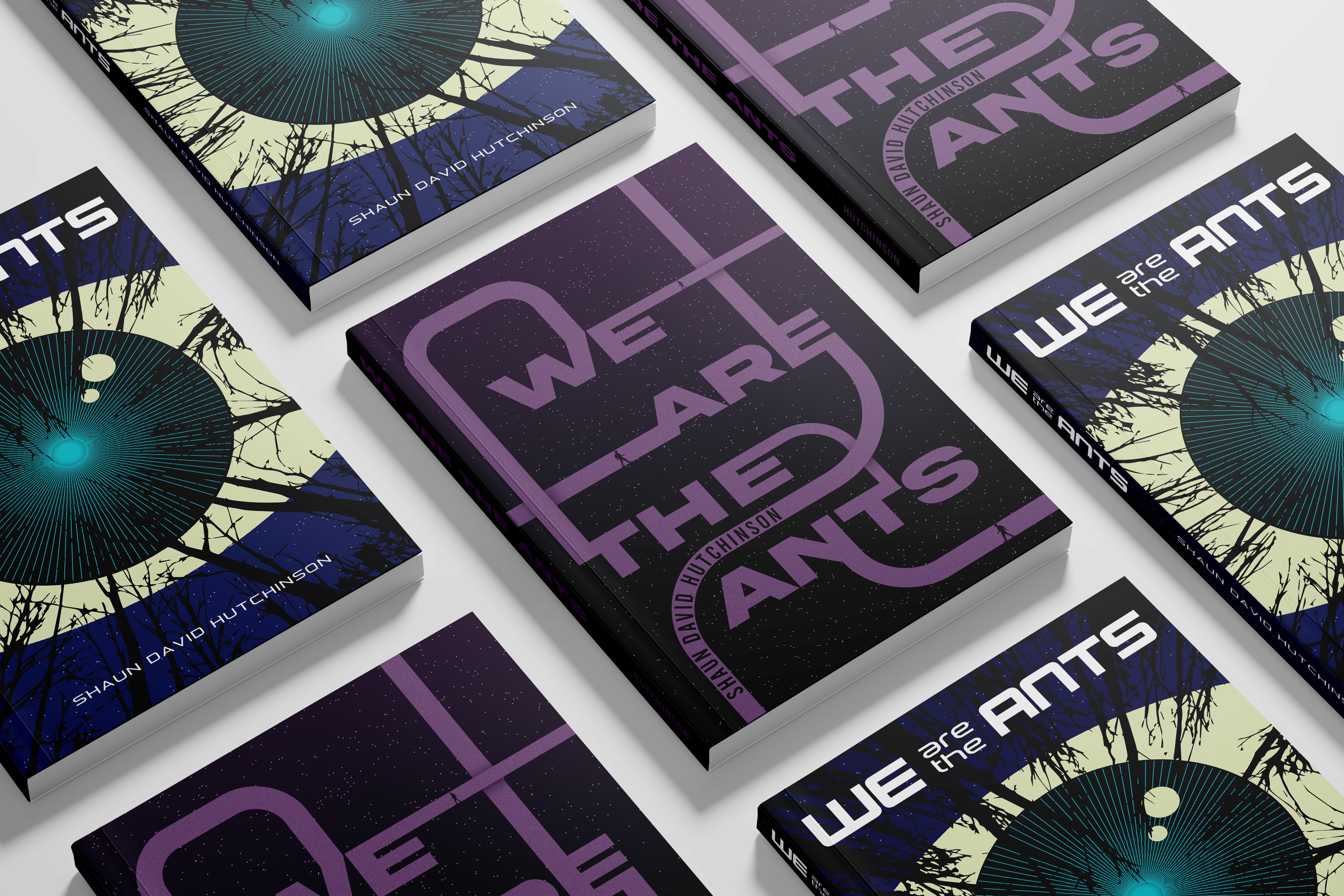
The novel We Are the Ants follows Henry Denton, a teen who is repeatedly abducted by aliens and given an ultimatum: the world will end in 144 days unless he pushes a big red button. The story explores themes of mental health, grief, loneliness, and personal responsibility. For this redesign, I explored both text-based and image-based approaches, experimenting with layout, typography, and imagery to capture the tone and core themes of the book. Both covers share visual themes of space and stars to create cohesion between the two approaches.
The novel We Are the Ants follows Henry Denton, a teen who is repeatedly abducted by aliens and given an ultimatum: the world will end in 144 days unless he pushes a big red button. The story explores themes of mental health, grief, loneliness, and personal responsibility. For this redesign, I explored both text-based and image-based approaches, experimenting with layout, typography, and imagery to capture the tone and core themes of the book. Both covers share visual themes of space and stars to create cohesion between the two approaches.
The novel We Are the Ants follows Henry Denton, a teen who is repeatedly abducted by aliens and given an ultimatum: the world will end in 144 days unless he pushes a big red button. The story explores themes of mental health, grief, loneliness, and personal responsibility. For this redesign, I explored both text-based and image-based approaches, experimenting with layout, typography, and imagery to capture the tone and core themes of the book. Both covers share visual themes of space and stars to create cohesion between the two approaches.
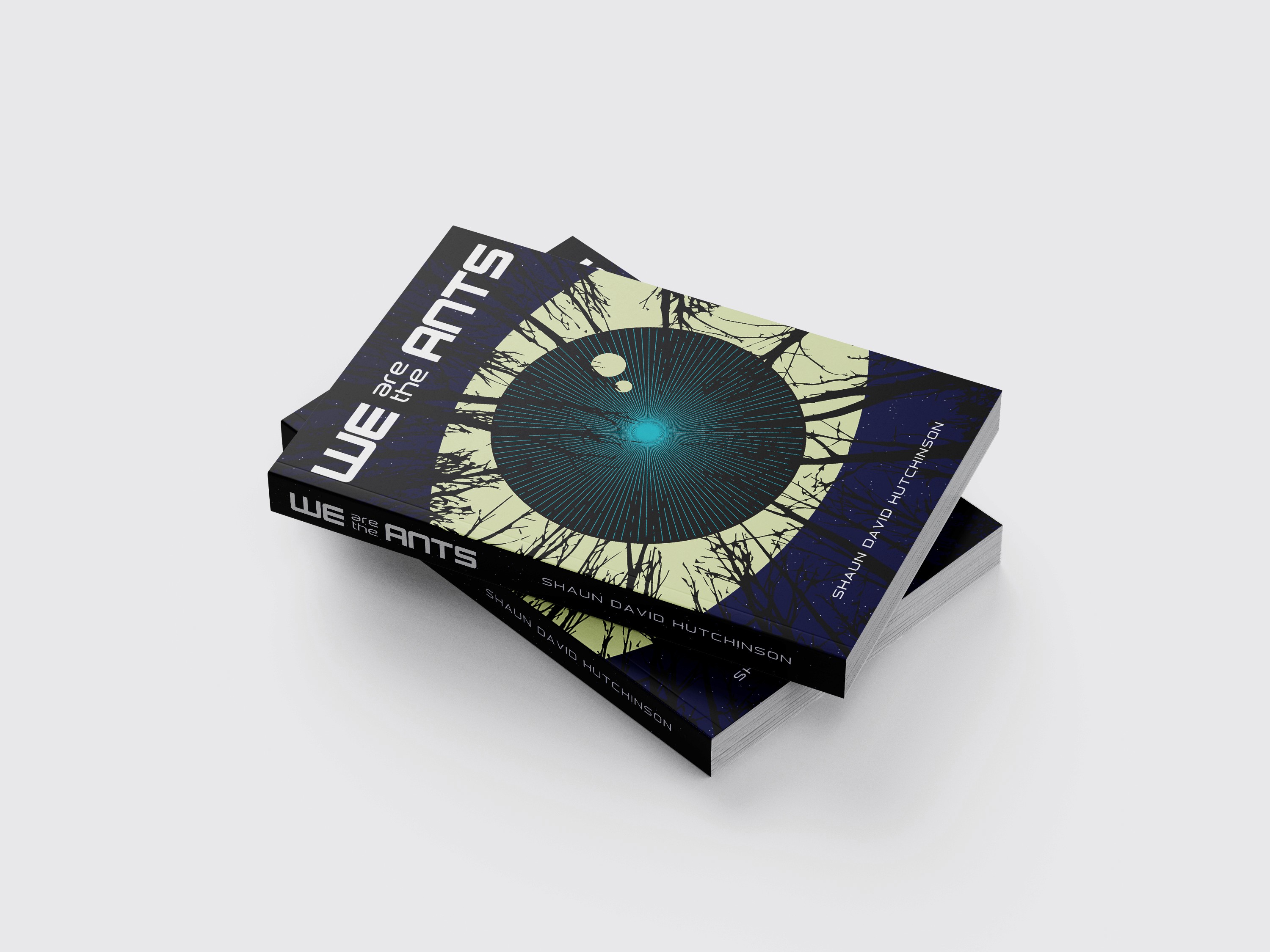
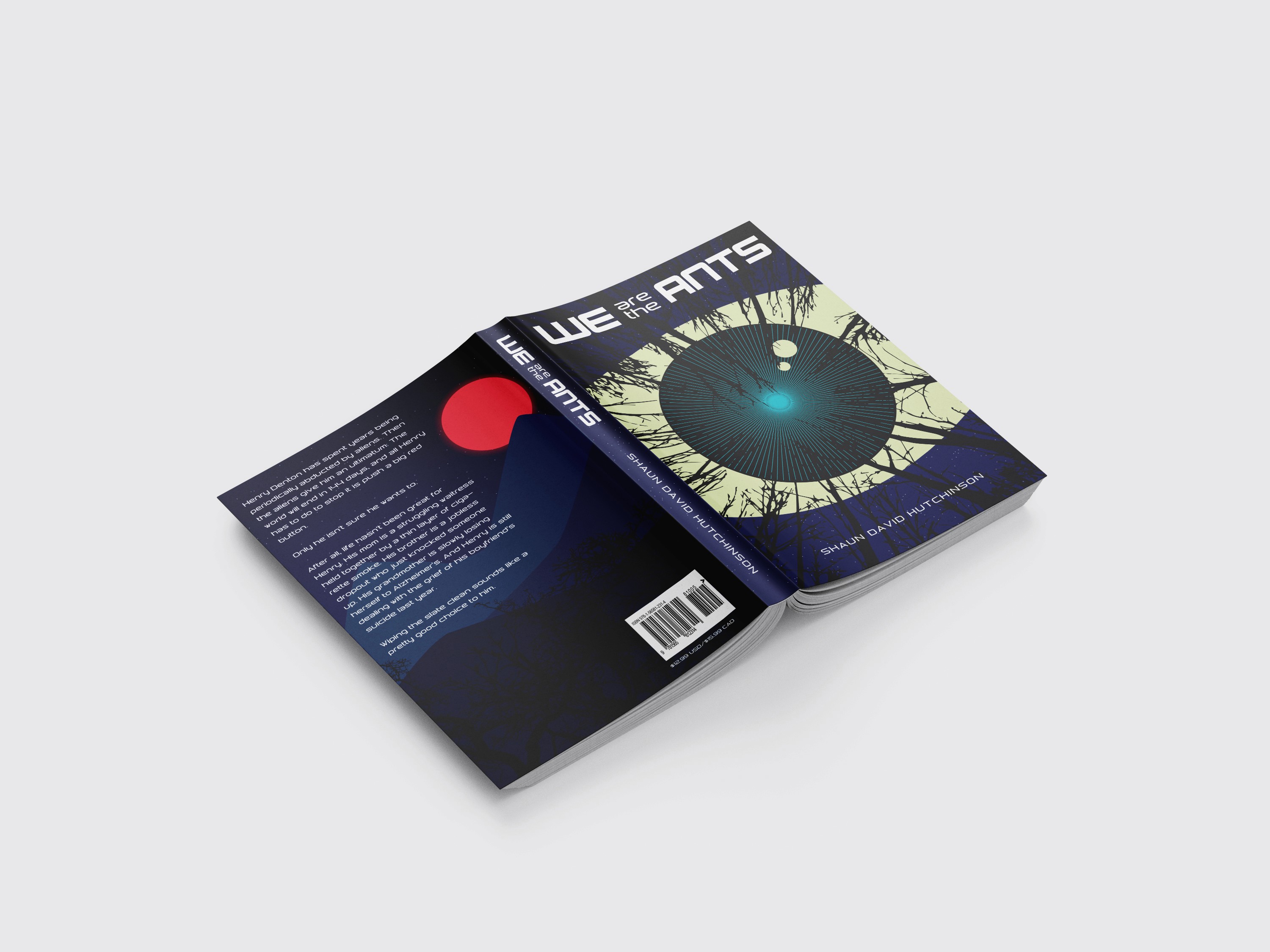
image based.
image based.
image based.
The front shows a ground-level view of a forest with a spaceship hovering above Henry, designed to look like an eye watching us like we’re ants. The tree perspective comes from a photo I took in a forest and was image-traced to get the perspective right. On the back, the moon becomes a red button, representing the choice Henry has to make. The design uses a deep blue palette with stars, and the typeface is inspired by science fiction while remaining readable, tying the whole look together. The cover captures the story’s suspense and alien-abduction theme while keeping the composition bold and visually engaging.
The front shows a ground-level view of a forest with a spaceship hovering above Henry, designed to look like an eye watching us like we’re ants. The tree perspective comes from a photo I took in a forest and was image-traced to get the perspective right. On the back, the moon becomes a red button, representing the choice Henry has to make. The design uses a deep blue palette with stars, and the typeface is inspired by science fiction while remaining readable, tying the whole look together. The cover captures the story’s suspense and alien-abduction theme while keeping the composition bold and visually engaging.
The front shows a ground-level view of a forest with a spaceship hovering above Henry, designed to look like an eye watching us like we’re ants. The tree perspective comes from a photo I took in a forest and was image-traced to get the perspective right. On the back, the moon becomes a red button, representing the choice Henry has to make. The design uses a deep blue palette with stars, and the typeface is inspired by science fiction while remaining readable, tying the whole look together. The cover captures the story’s suspense and alien-abduction theme while keeping the composition bold and visually engaging.
type
based.
type
based.
type
based.
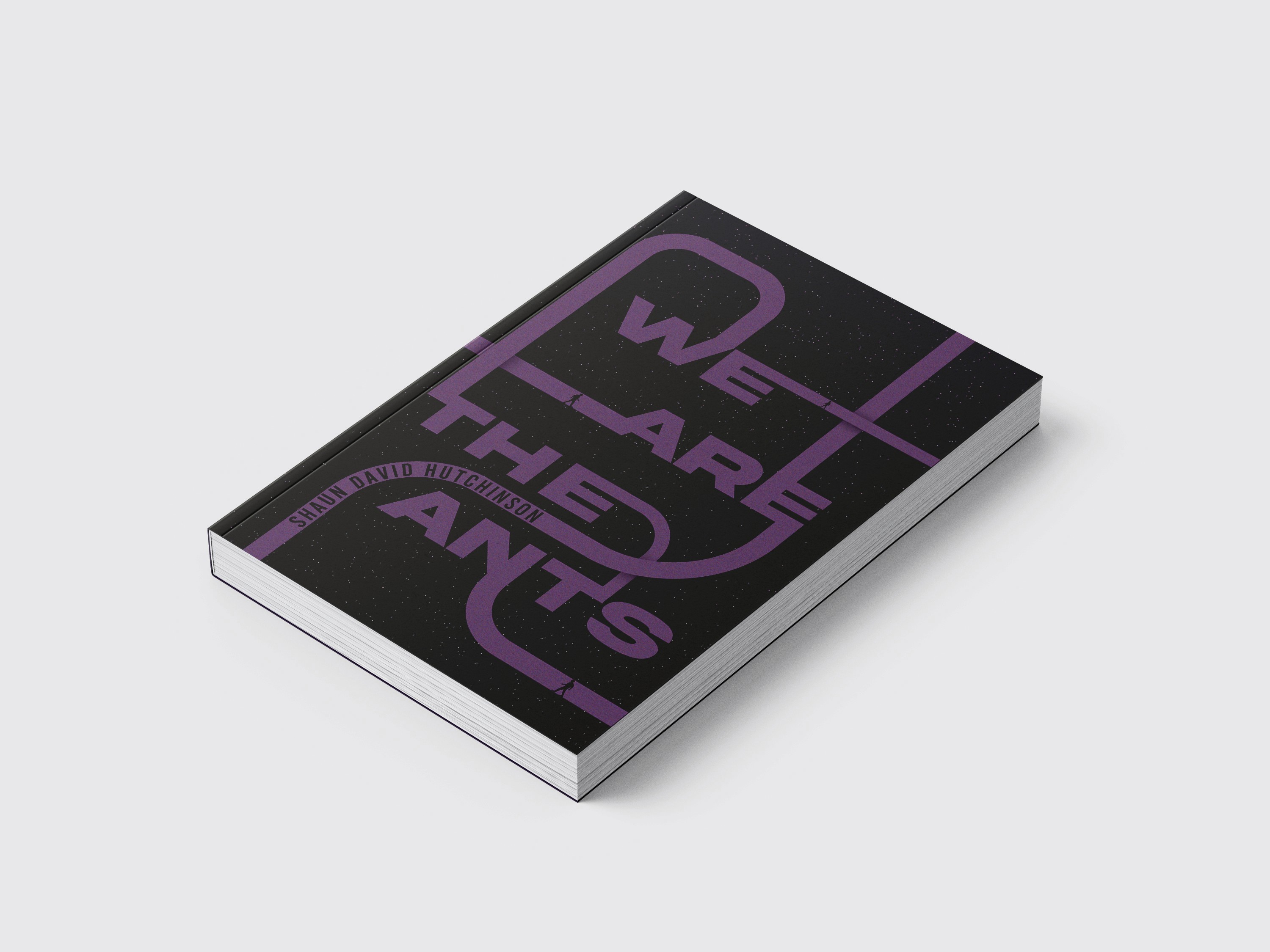
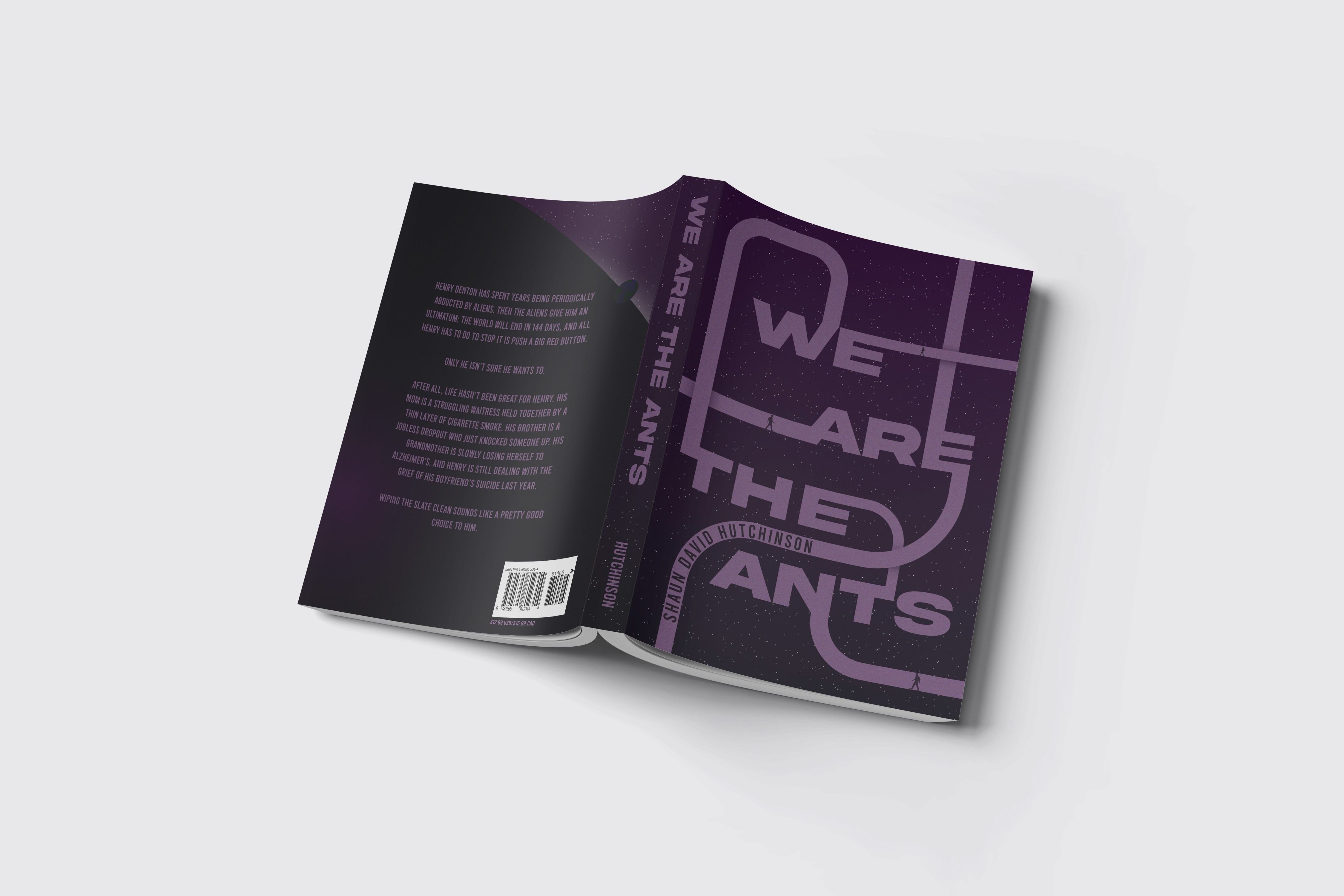
The cover turns the title into an ant farm, referencing We Are the Ants and emphasizing humanity’s insignificance to the aliens. All the human figures move the same way through the ant farm, reflecting the repetitive routines of daily life and echoing Henry’s feelings of isolation and depression. The contained, repetitive typography reinforces the ideas of observation and control. The cover uses a deep purple palette with stars, while the back shows a large object, maybe a planet, looming over a tiny Earth, highlighting its smallness in the vastness of space and creating a sense of scale and doom.
The cover turns the title into an ant farm, referencing We Are the Ants and emphasizing humanity’s insignificance to the aliens. All the human figures move the same way through the ant farm, reflecting the repetitive routines of daily life and echoing Henry’s feelings of isolation and depression. The contained, repetitive typography reinforces the ideas of observation and control. The cover uses a deep purple palette with stars, while the back shows a large object, maybe a planet, looming over a tiny Earth, highlighting its smallness in the vastness of space and creating a sense of scale and doom.
The cover turns the title into an ant farm, referencing We Are the Ants and emphasizing humanity’s insignificance to the aliens. All the human figures move the same way through the ant farm, reflecting the repetitive routines of daily life and echoing Henry’s feelings of isolation and depression. The contained, repetitive typography reinforces the ideas of observation and control. The cover uses a deep purple palette with stars, while the back shows a large object, maybe a planet, looming over a tiny Earth, highlighting its smallness in the vastness of space and creating a sense of scale and doom.